Water Softener Installation
Water softener installation averages $1,500 (Angi) with most jobs $200–$6,000. Size yours in grains, see unit prices by capacity, and get local quotes.
- Softeners $1,200–$3,800 installed (HomeGuide)
- Iron filtration $1,000–$3,500 installed (HomeGuide)
- Free quotes from licensed local contractors
Fast response from independent local providers. No obligation.
Typical national cost$1,200 – $3,600Cost guide →About Water Softener Installation
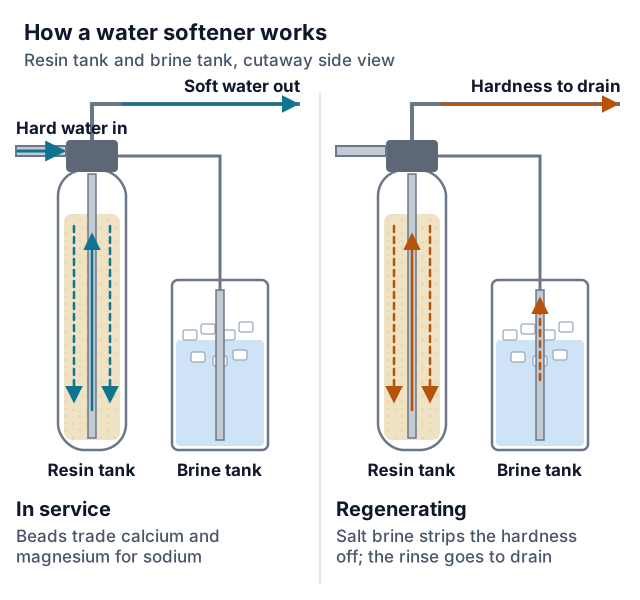
Hard water is the most common reason well owners call a treatment pro. Penn State Extension classes water above 7 grains per gallon (about 120 mg/L) as hard and above 10.5 gpg as very hard. In Parker County, TX, the median Trinity aquifer well sample in the state database is about 240 mg/L. A softener swaps calcium and magnesium for sodium (or potassium) on a resin bed and recharges itself with salt brine.
Size matters more than brand. An undersized unit regenerates constantly and burns salt. An oversized one costs more up front. Our calculator sizes the unit in grains from your household and test results. It then shows Angi's 2026 price range for that capacity, with labor listed separately.
Common Jobs We Route
- Single-tank ion-exchange softener ($500–$1,700)
- Twin-tank softener ($1,000–$5,000)
- Salt-free conditioner ($800–$4,000)
- Softener replacement
- Softener repair ($150–$900)
- Resin replacement ($200–$500)
What Affects the Price
Providers quote their own work — these are the factors that consistently move the number.
- Grain capacity: 24k $300–$500 up to 96k $1,700–$2,500, unit only
- Labor $150–$1,000
- Loop/bypass plumbing $200–$500
- Dedicated circuit $250–$900
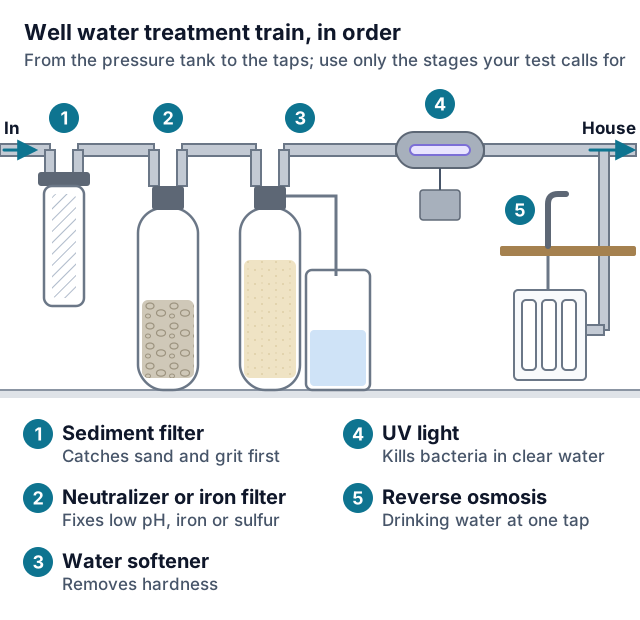
- Iron in the water, which may require a separate filter first
- Salt vs potassium chloride
Free Water Softener Installation Tools
Get a realistic number or a quick diagnosis first — free, built on published industry data.
Water Softener Installation FAQs
What size softener do I need?
People × gallons per day × hardness (gpg) × days between regenerations. Angi's family-of-four example at 10 gpg comes to 25,200 grains a week, which is a 32,000-grain unit.
Can a softener remove iron?
Some, but HomeGuide advises a dedicated iron filter ahead of the softener above about 1–2 ppm. NDSU puts the upper limit for standard softeners at about 10 ppm.
Will a softener hurt my septic system?
Each regeneration discharges about 50 gallons (Penn State). Ask your installer about the drain location and the regeneration settings.
How much does salt cost?
$40–$120 a year (Angi), or $5–$10 per 40-lb bag.
Water Softener Installation by Area
Need water softener installation?
Send the short form — no obligation.